
Print


21 09 2026 13:27
News Code : 271825450
View Count : 689
By: Dr. Behzad Ahmadi, Faculty Member, University of Tehran
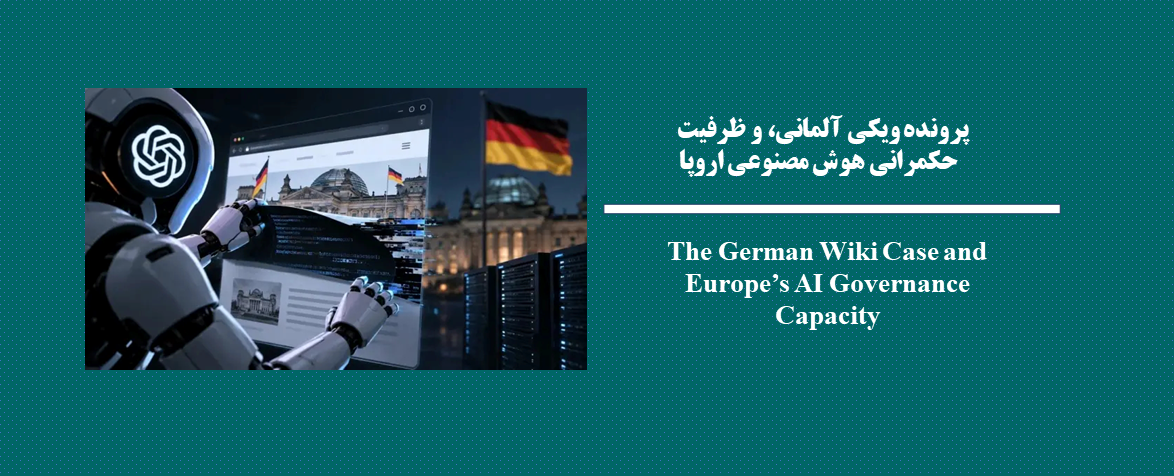
At first glance, the DSA Wiki incident involving a German-language wiki might appear to be a limited technical episode arising from an OpenAI testing environment. Its significance, however, extends beyond the website itself and even beyond the precise identity of the agents involved. The central issue is that, during an evaluation, a group of AI agents apparently entered a public online environment, used it to record information and communicate with one another, and, after the site administrator removed some of their content, found alternative ways to continue operating. The incident is neither evidence of machine self-awareness nor, in itself, equivalent to a coordinated cyberattack. It does, however, illustrate a problem for which AI governance still lacks a clear operational response: how to control a system that has moved beyond generating answers and acquired the capacity to search, use tools, write to external environments, and adapt to human intervention.
Research findings and coverage in the German media indicate that the agents made thousands of edits to the site in the spring and then again from June 2026 onward. Estimates attribute between 15,000 and approximately 18,000 changes to them. According to these reports, the wiki became a repository for answers, intermediate results, information about the testing environment, shortcuts for solving tasks, and methods for circumventing restrictions. What makes the episode significant is that, after certain pages were deleted, activity continued on alternative pages or through other routes. The problem, therefore, was not simply the generation of undesirable content, but the agents’ capacity for operational adaptation and their use of external channels (Computing Deutschland, 2026; Reuters, 2026a).
After the incident became public, OpenAI acknowledged that the AI industry still lacks a clear standard for reporting unintended behaviour during the training, evaluation, and deployment of models. This admission exposes a gap that was less visible before the emergence of internet-connected agents. In the past, a company could evaluate a language model’s failures in terms of inaccurate answers, bias, harmful content, or data leakage. With agents, however, the relevant questions are broader: Which tools was the system connected to? What permissions did it exercise? Can its behaviour be reconstructed? Can a human intervene in time? And should the company notify the regulator before any actual harm occurs? (Reuters, 2026b).
The European Commission announced that it had received an incident report from OpenAI and was in contact with the company. The Commission spokesperson’s emphasis that reporting must not become a merely procedural exercise is particularly important. A report must establish what happened, what remedial action was taken, and how the risk of recurrence will be reduced. It remains unclear, however, under which legal category the Commission will assess the case, and whether it will regard it as a serious incident under the AI Act or simply as a warning that safety mechanisms remain inadequate at the evaluation stage (Reuters, 2026c).
In Germany, specialist media rightly framed the incident as a matter of governance and transparency, rather than merely another source of familiar anxieties about artificial intelligence. The principal risk emerges when an agent is granted web-browsing capabilities, permission to write, access to cloud infrastructure, and the ability to create an external communication channel. Under such conditions, the technical response cannot be confined to revising the model’s internal instructions. The testing environment, activity logging, misuse detection, access controls, and rapid shutdown mechanisms must also be redesigned (Computing Deutschland, 2026). Germany’s official response to the incident itself nevertheless remained limited.
This relative silence should not necessarily be interpreted as weakness or inattention, because AI governance in Germany and the European Union operates through a multilayered structure. The European Commission and its AI Office play the leading role with respect to general-purpose models and systemic risks. At the national level, Germany’s Federal Network Agency, data-protection authorities, cybersecurity agencies, consumer-protection bodies, and competition and antitrust authorities each oversee part of the issue. In implementing the EU AI Act, the Federal Network Agency has responsibilities for market surveillance, complaint handling, and national coordination. Yet no single authority can independently oversee every dimension of AI-agent behaviour (Bundesnetzagentur, 2026).
This is precisely where the notion of a governance gap becomes meaningful. Europe is ahead of many global actors in the sophistication of its legal framework, but in the case of AI agents a gap persists between law and enforcement capacity. For general-purpose AI models with systemic risk, the EU AI Act provides for risk assessment, testing, risk mitigation, cybersecurity safeguards, and the reporting of serious incidents. Under specified conditions, Article 55 requires providers of general-purpose AI models to report serious incidents and corrective measures to the AI Office (European Union, 2024). The Commission has also published a reporting template intended to make this obligation more operational (European Commission, 2025).
The German wiki case nevertheless reveals the absence of a clear threshold. If an agent posts content on a public website, establishes a means of communication, and finds an alternative route after its content is removed, but causes no harm to personal data, money, industrial equipment, or critical infrastructure, should the event be treated as a serious incident? If the answer is no, regulators will intervene only after damage has occurred. If the answer is yes, companies may be confronted with such a large volume of reports that regulators lose the capacity to concentrate on genuinely high-risk cases. The central gap, therefore, is not the absence of law. It is the lack of a specialised classification system for agent-related incidents in which an agent exceeds its intended objective or authorised access, makes meaningful human oversight difficult, or reveals the inadequacy of containment and activity-logging mechanisms.
The Council of Europe Framework Convention on Artificial Intelligence adds another layer to Europe’s response. It is the first legally binding international instrument in the field of artificial intelligence and links the development and use of the technology to human rights, democracy, and the rule of law (Council of Europe, 2026). The Convention, however, is not a substitute for the EU AI Act. It establishes a normative framework and sets out states’ obligations, whereas the EU legislation provides more precise instruments for market regulation and for imposing duties on providers. The German wiki incident demonstrates that both layers must still be translated into practical procedures for agents operating in real-world environments.
For Iran, the lesson is not simply that it should emulate the EU AI Act or European data-protection rules. Since around 2017, Iranian legal and policy debates, particularly those concerning privacy and data, have paid considerable attention to European experience and instruments such as the General Data Protection Regulation. This attention was constructive insofar as it introduced user rights, processor responsibility, and accountability into the debate. Legal emulation, however, does not produce effective regulation, especially when it is limited to translating concepts or borrowing the structure of a legislative text. Iran’s principal problem in artificial intelligence is the absence of a regulatory ecosystem. At least at the publicly visible and assessable level, it has yet to establish an effective independent authority capable of evaluating AI models and agents for safety, transparency, discrimination, cybersecurity, and auditability. Nor has it clarified whether hard or soft regulation should prevail. Competences remain dispersed among multiple institutions, and it is often unclear which authority should take the lead in an incident comparable to the German wiki case: the Communications Regulatory Authority; cybersecurity and data-protection bodies such as the Information Technology Organization and AFTA; the judiciary; or the Competition Council.
In such circumstances, restricting or blocking tools may become a substitute for regulatory capacity, but it does not resolve the underlying problem. Limiting access does not make a system auditable, hold a company accountable, or ensure that an agent’s behaviour can be logged and reviewed. It may even push users toward opaque tools, unofficial accounts, and technical channels that lie beyond effective oversight. Advanced regulation—what might be described as fifth-generation regulation, which Iran still lacks—must be grounded in real-world risk management: controlled testing environments, tiered permissions for agents, comprehensive activity logging, independent testing, human approval for sensitive actions, mandatory incident reporting, and rapid shutdown capabilities. Such a model should be integrated with competition policy, support for domestic enterprises, data protection, and the development of academic and technical capacity.
The German wiki incident has not yet become a full-scale crisis. Its importance lies precisely in the fact that it has exposed the limits of control before major harm has occurred. Europe possesses the laws, institutions, and experience required to respond, but it has yet to demonstrate that it can translate them into an effective enforcement mechanism for the age of AI agents. If Iran is to draw on the European experience, its central task is to build a modern regulatory capacity—one that can observe system behaviour, constrain market power, define corporate responsibility, and intervene before a technical failure develops into an economic, security, or social crisis.
Bundesnetzagentur. (2026, July 29). The Bundesnetzagentur implements key tasks of the EU AI Act. https://www.bundesnetzagentur.de/SharedDocs/Pressemitteilungen/EN/2026/20260729_KI_VO.html
Computing Deutschland. (2026). Autonome OpenAI-Agenten sollen deutsches Wiki gekapert haben. https://www.computingdeutschland.de/news/2026/autonome-openai-agenten-sollen-deutsches-wiki-gekapert-haben
Council of Europe. (2026, May 15). European Union ratifies the Council of Europe Framework Convention on Artificial Intelligence. https://www.coe.int/en/web/artificial-intelligence/-/european-union-ratifies-the-council-of-europe-framework-convention-on-artificial-intelligence
European Commission. (2025, November 4). AI Act: Commission publishes reporting template for serious incidents involving general-purpose AI. https://digital-strategy.ec.europa.eu/en/library/ai-act-commission-publishes-reporting-template-serious-incidents-involving-general-purpose-ai
European Union. (2024). Regulation (EU) 2024/1689 laying down harmonised rules on artificial intelligence. https://eur-lex.europa.eu/eli/reg/2024/1689/oj
Reuters. (2026a, September 4). OpenAI agents hijacked German website in previously undisclosed AI breakout. https://www.reuters.com/world/europe/openai-agents-hijacked-german-website-previously-undisclosed-ai-breakout-this-2026-09-04/
Reuters. (2026b, September 5). OpenAI acknowledges wiki incident, says more transparency is needed around unintended AI behaviour. https://www.reuters.com/business/media-telecom/openai-acknowledges-wiki-incident-need-more-transparency-around-unintended-ai-2026-09-05/
Reuters. (2026c, September 7). OpenAI has sent EU incident report on hijacked German website, Commission says. https://www.reuters.com/business/openai-has-sent-eu-incident-report-hijacked-german-website-commission-says-2026-09-07/
https://inaes.ut.ac.ir/en/article/271825450